

Sedentary lifestyle – stand up
Routinely sitting for prolonged periods is a health risk factor and can increase the risk of cardiovascular diseases, cancer, diabetes, psychological disorders and mortality among adults.
Among children, prolonged sitting increases the risk of obesity, metabolic diseases and even reduced bone density as well as having negative impacts on mental, motor and psychosocial skills. Prolonged sitting can cause circulatory problems among the elderly, leading to more frequent falls, reduced mobility, inadequate joint lubrication and muscle loss.
Small effort, big benefit
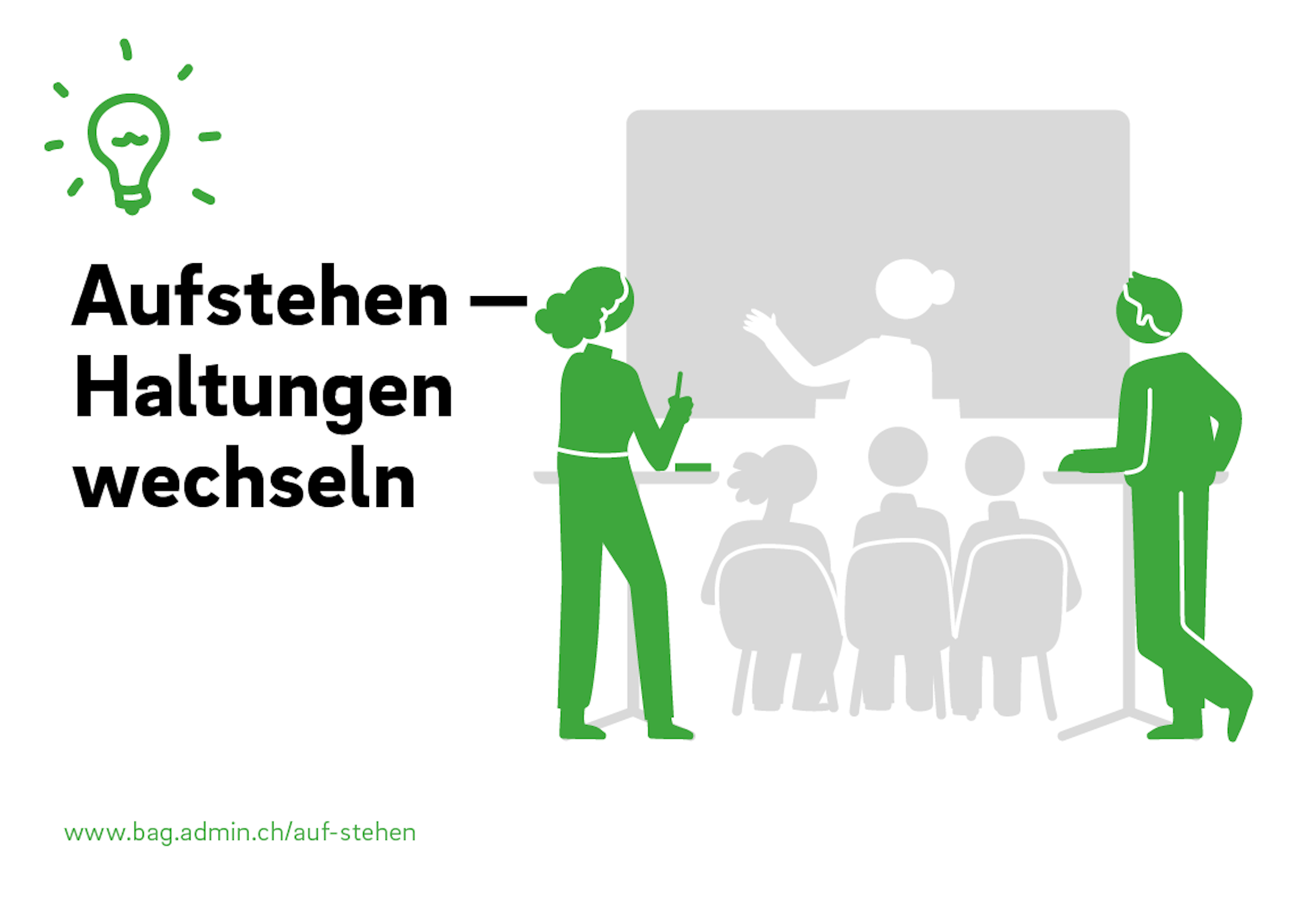
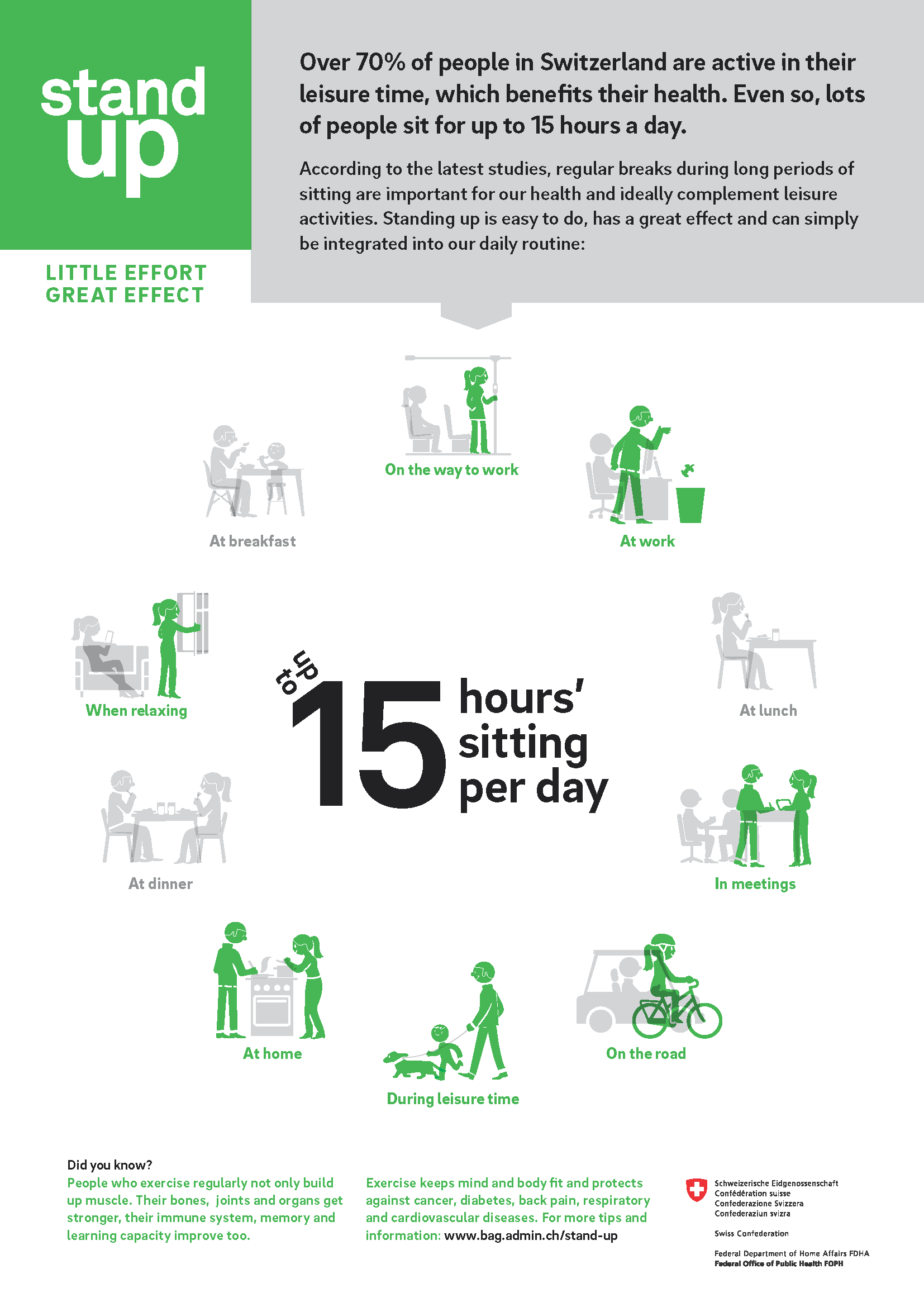
Studies shows that regular bouts of standing have a positive impact on health and ideally complement leisure activities. That’s why it’s important to regularly break up long periods spent sitting, both at work and in your own time. Standing is easy, makes a big difference to your health and can be done almost anywhere:
- At work, university or school: take regular breaks from sitting to move around or stand up, make telephone calls while standing, have conversations while standing or walking.
- During leisure time: take active breaks from the screen and have frequent time-outs from media consumption. Occasionally read your post, newspaper or text messages while standing and stand in the tram or bus.
- On an everyday basis: be active when on the move: walk or cycle to work or to the shops, get off the tram or bus a couple of stops early.
Physical activity in everyday life
You can find further information and ideas on daily exercise under “Documents”.
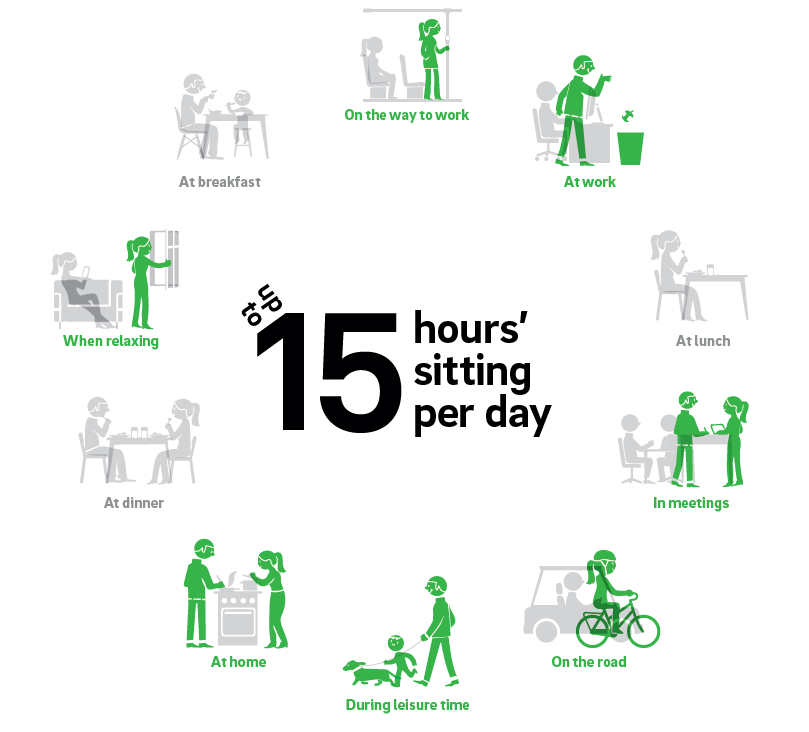
The Swiss population spend an average of 5.7 hours a day sitting. Employed persons spend more time sitting at 6.0 hours than those not in gainful employment (4.7 hours). 19.0 percent of the Swiss population spend even more than 8.5 hours per day sitting.
reference: Sitting (age: 15+) | MonAM | FOPH
Further information
Federal Office of Public Health FOPH
Schwarzenburgstrasse 157
Switzerland - 3003 Bern