

National Strategy on Addiction
The National Strategy on Addiction aims to prevent the development of addiction, provide help to people with an addiction and reduce the negative impact on health and society.

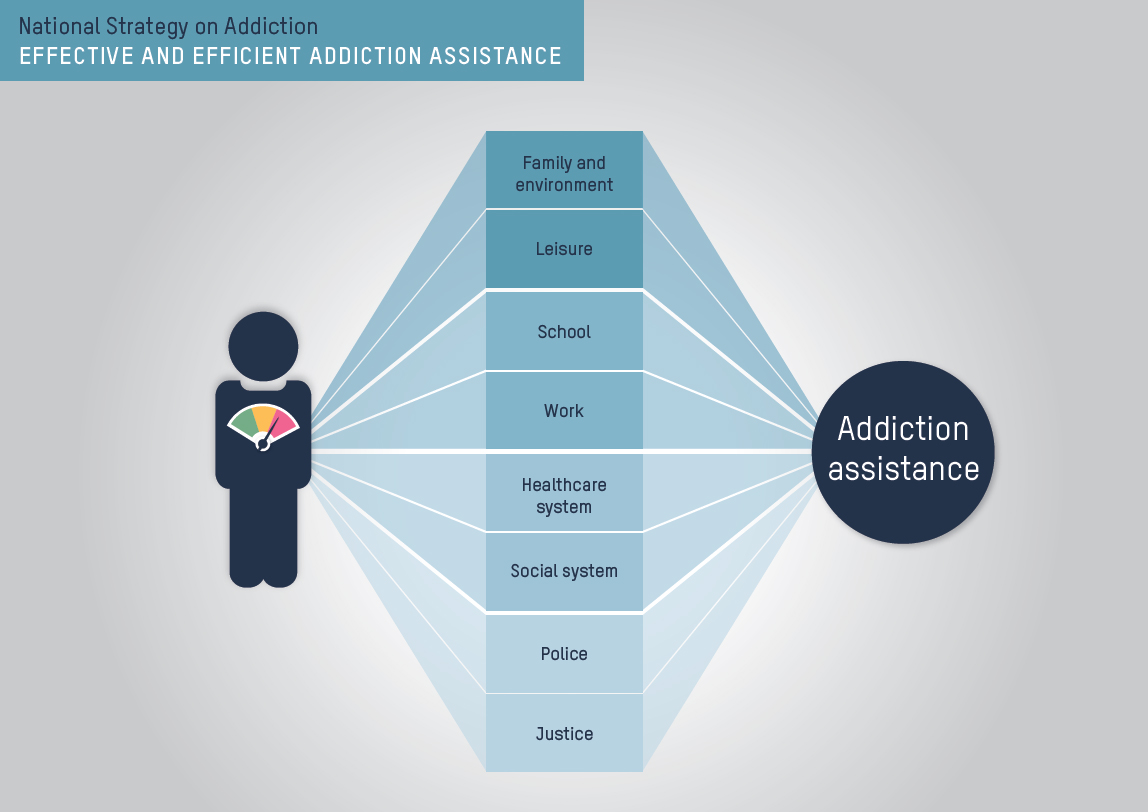
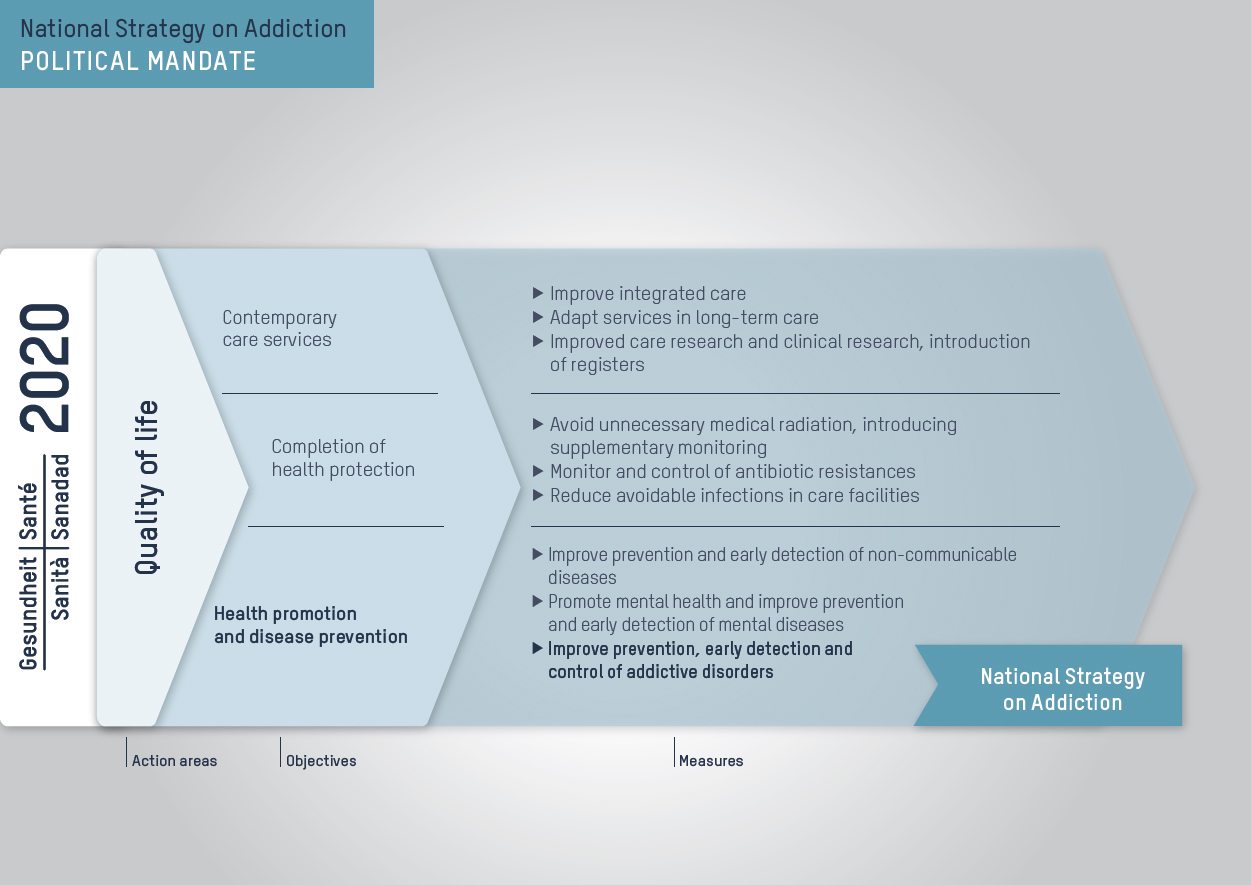
As part of the Federal Council's Health2020 initiative, the Federal Office of Public Health (FOPH) and its partners have developed the National Strategy on Addiction. The strategy was adopted by the Swiss Federal Council in November 2015. For the first time, it creates a comprehensive orientation and action framework for stakeholders at all federal levels in the field of addiction and in related areas of social and health policy. It serves experts and service providers as a starting point for their addiction-specific activities and projects.
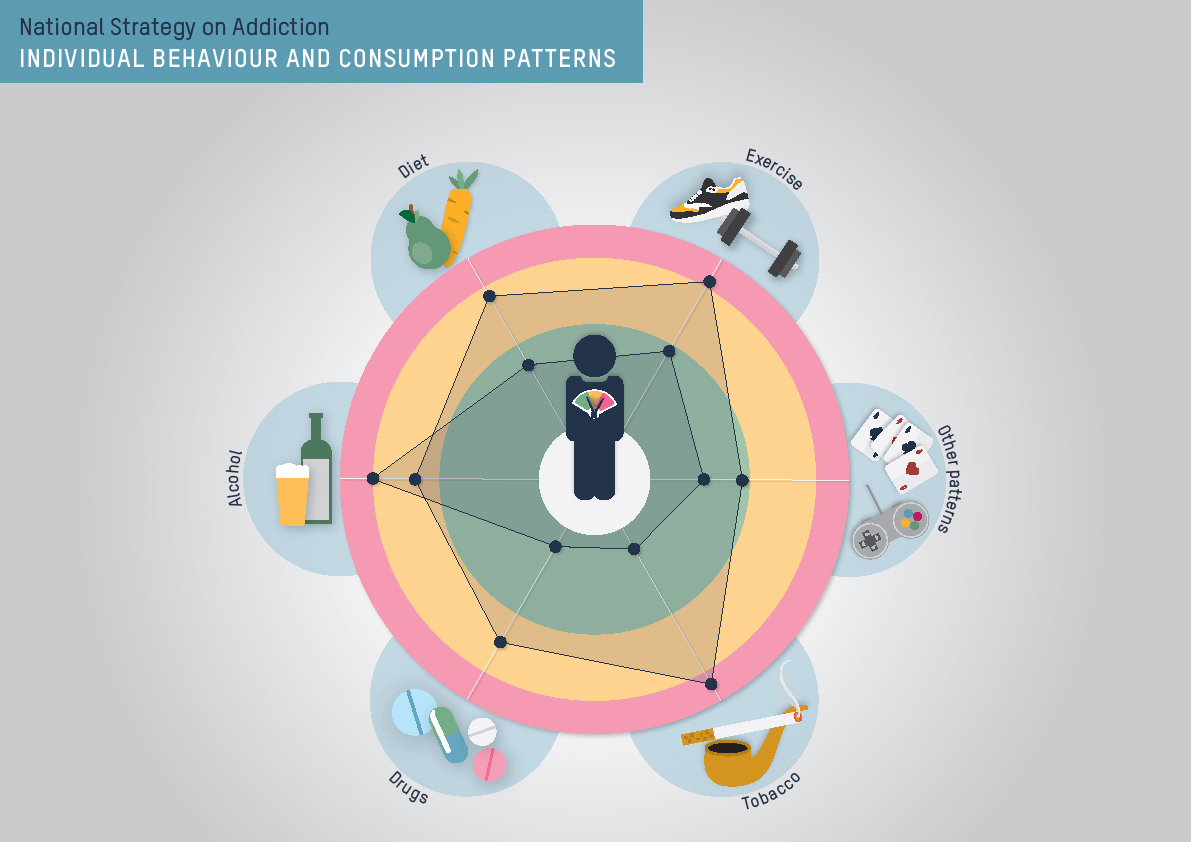
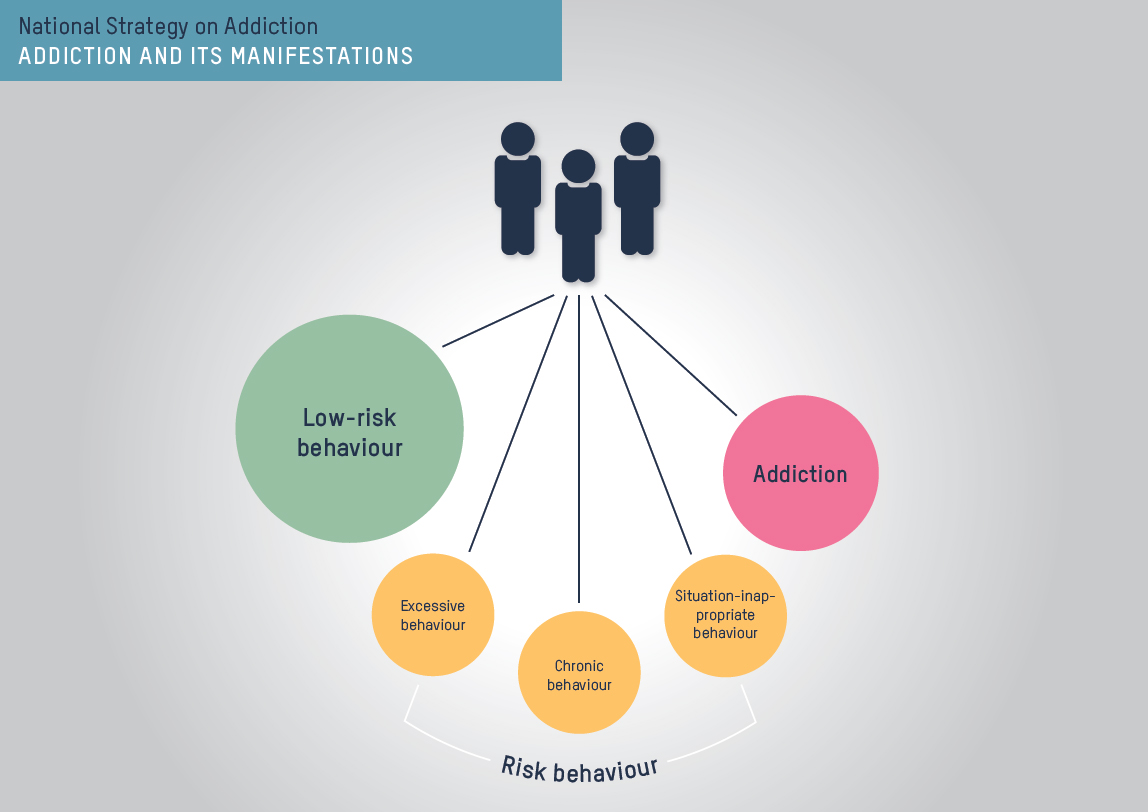
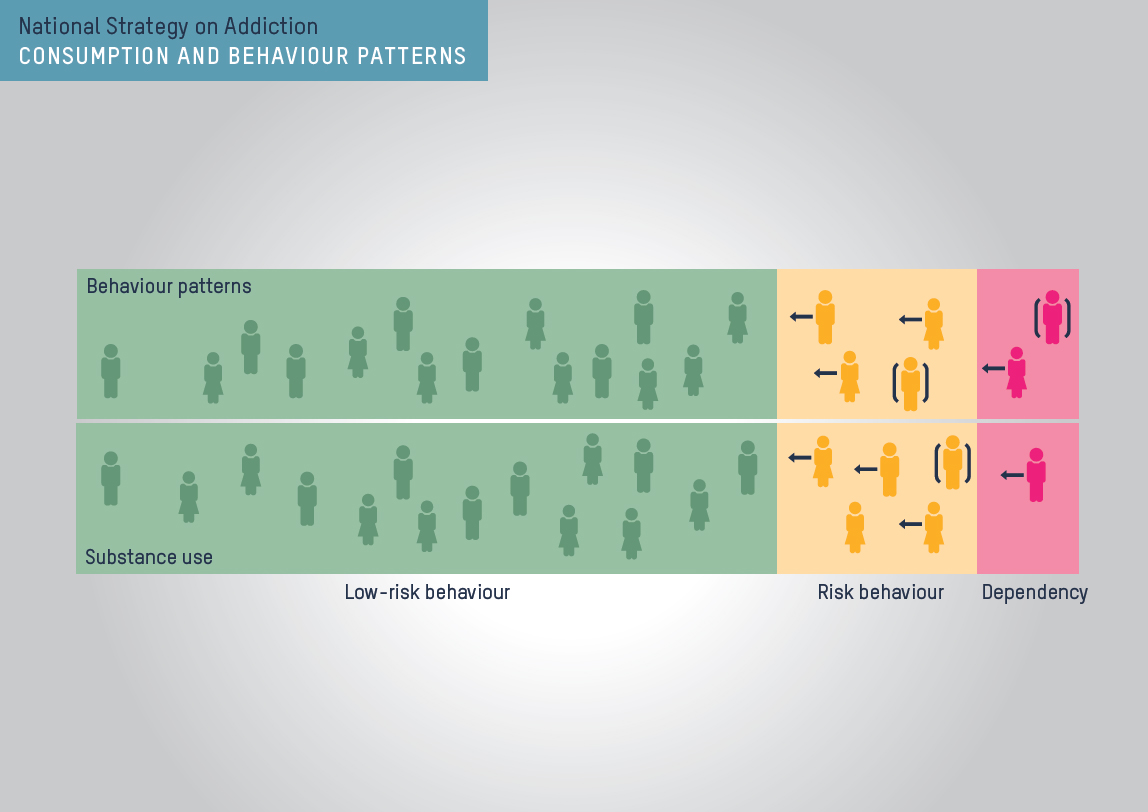
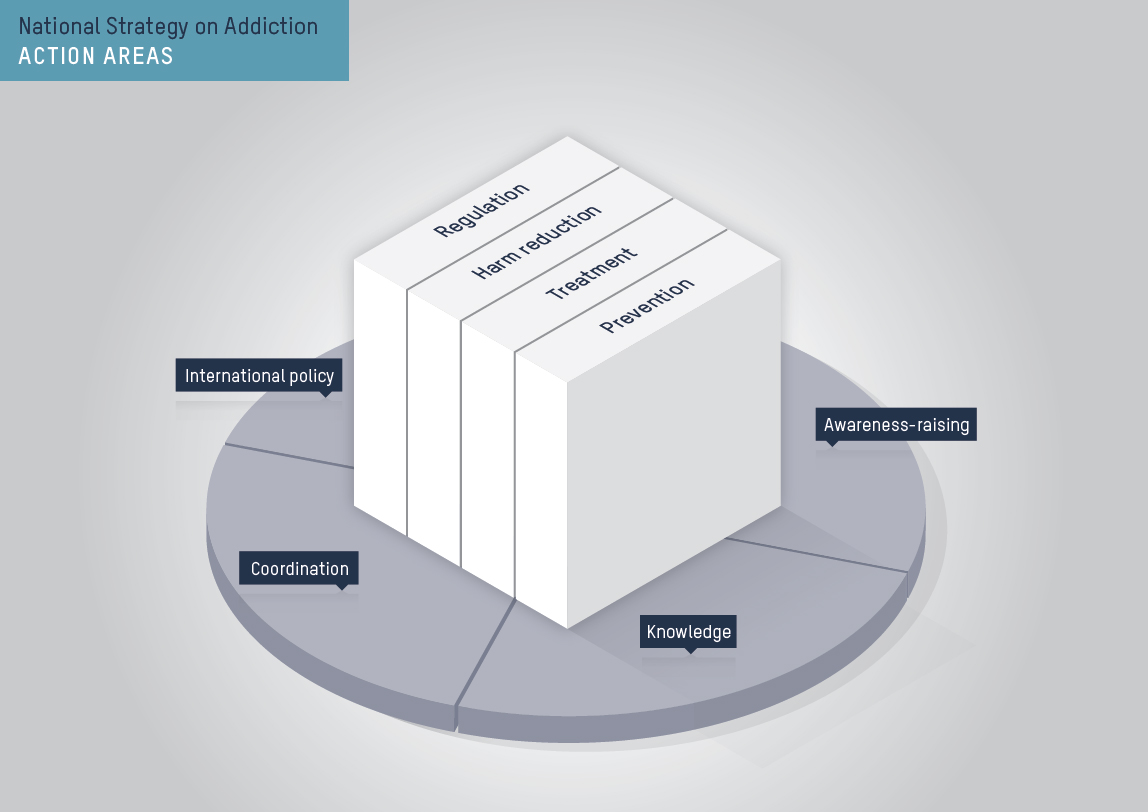
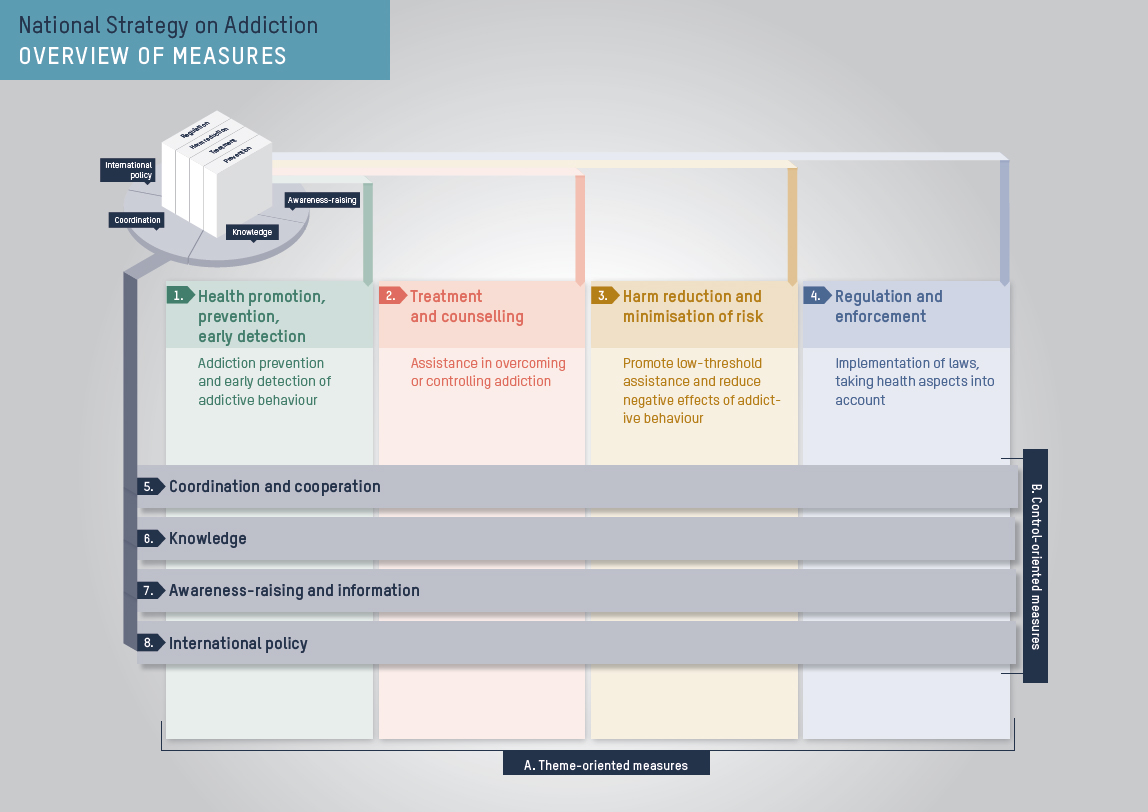
The National Strategy on Addiction is based on the balance between personal responsibility and support for people with an addiction. It further develops Switzerland's successful addiction policy with its four pillars of prevention, therapy and counseling, harm reduction and regulation. It is integral, cross-addiction and non-substance-related. It aims to strengthen the prevention of addiction and its early detection and to ensure the long-term treatment of people with an addiction. With the National Strategy on Addiction, the Federal Council has created the basis for taking measures not only for drug, alcohol and tobacco-related forms of addiction but also for other forms of addiction such as drug addiction, addictive online behavior and gambling addiction.
In August 2024, the Federal Council took note of the updated plan of measures 2025-2028. This will serve as the basis for implementing the strategy until 2028. As part of this mandate, the sponsoring organisations – the FOPH, the GDK and the Stiftung Gesundheitsförderung Schweiz Swiss health promotion foundation – are merging the existing national strategies on NCDs and addiction into a cross-cutting umbrella strategy. This also encompasses the prevention of mental health conditions. The future strategy thus takes account of the interrelationships between the three thematic areas and the underlying risk and protective factors. The successful four-pillar policy will be continued.
The key elements of the umbrella strategy will be presented to partner organisations and federal agencies in October 2026. Consultation with stakeholders is scheduled for early 2027. The umbrella strategy will be submitted to the platform for dialogue on national health policy at the end of 2027 and subsequently to the Federal Council for approval.
In parallel, action plans will be drawn up with the involvement of the relevant stakeholders. These are to be approved by the platform for dialogue on national health policy at the end of 2028. Implementation will begin in 2029.

Further information
Federal Office of Public Health FOPH
Schwarzenburgstrasse 157
Switzerland - 3003 Bern